About this park
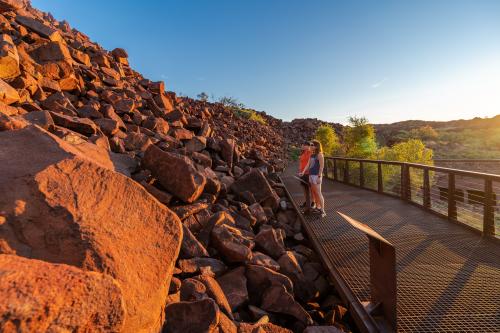
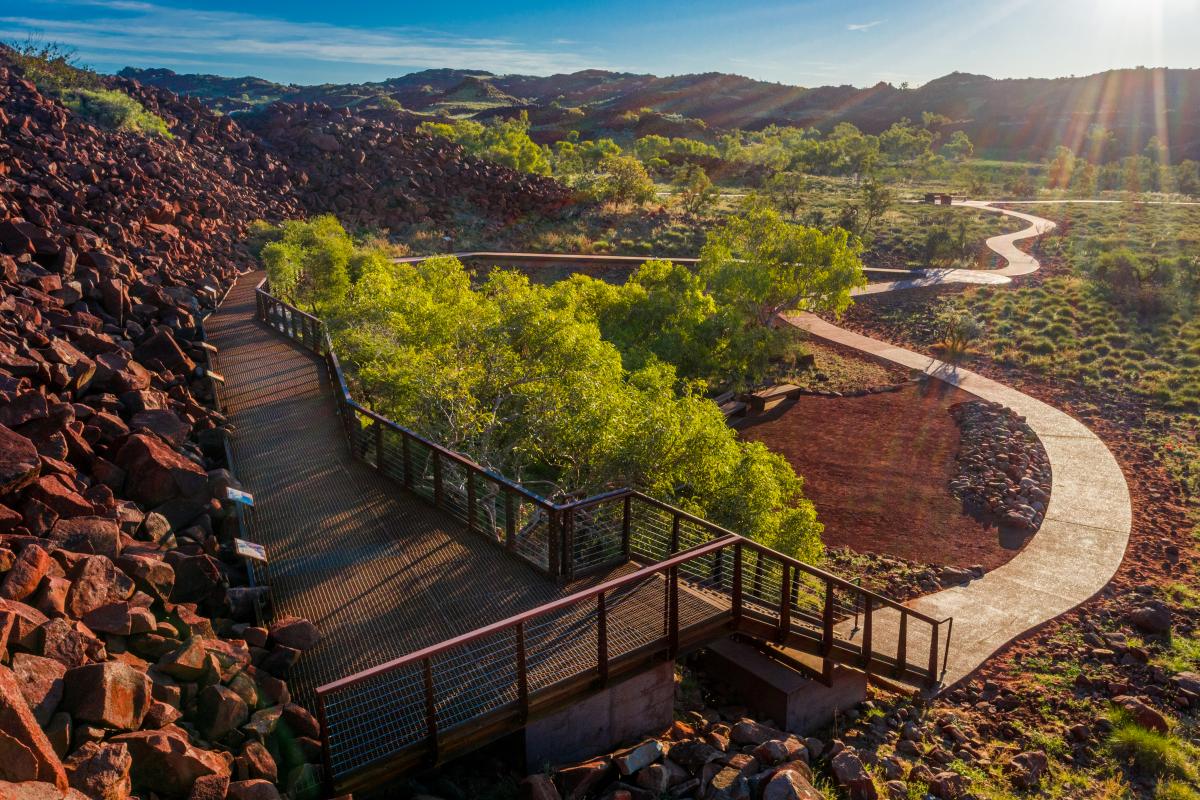
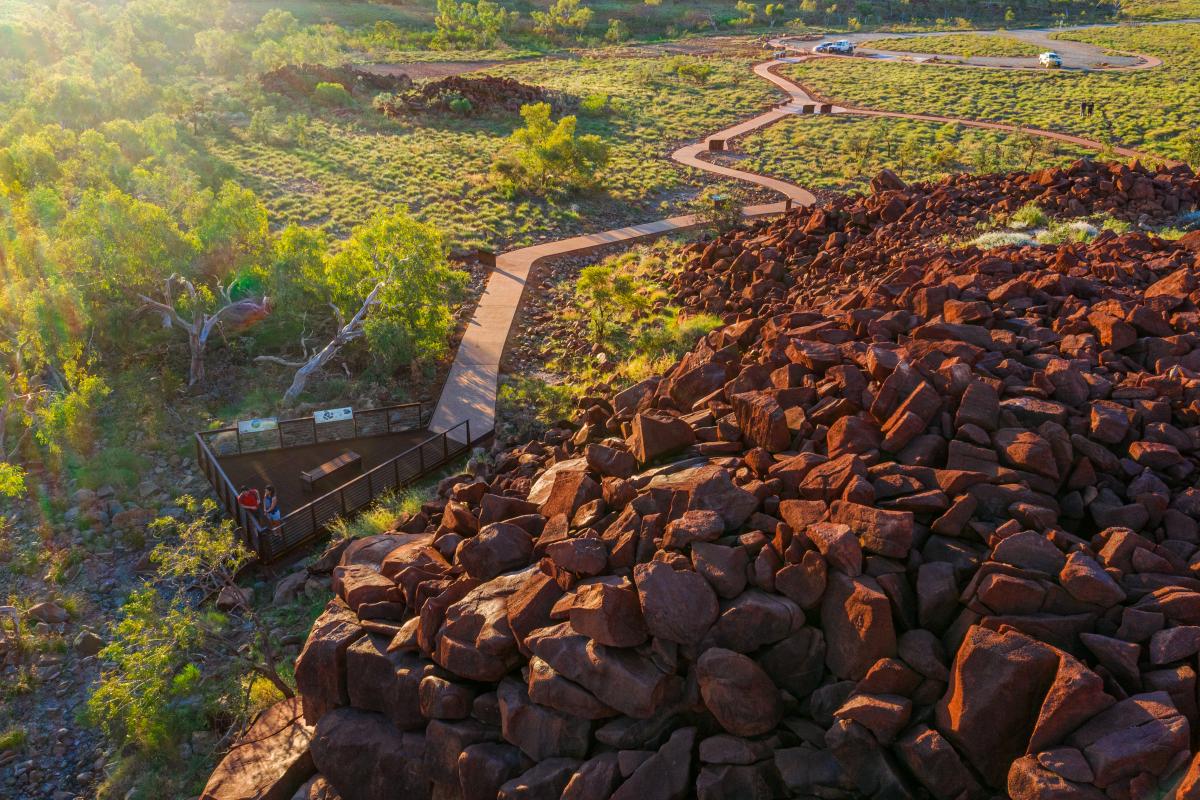
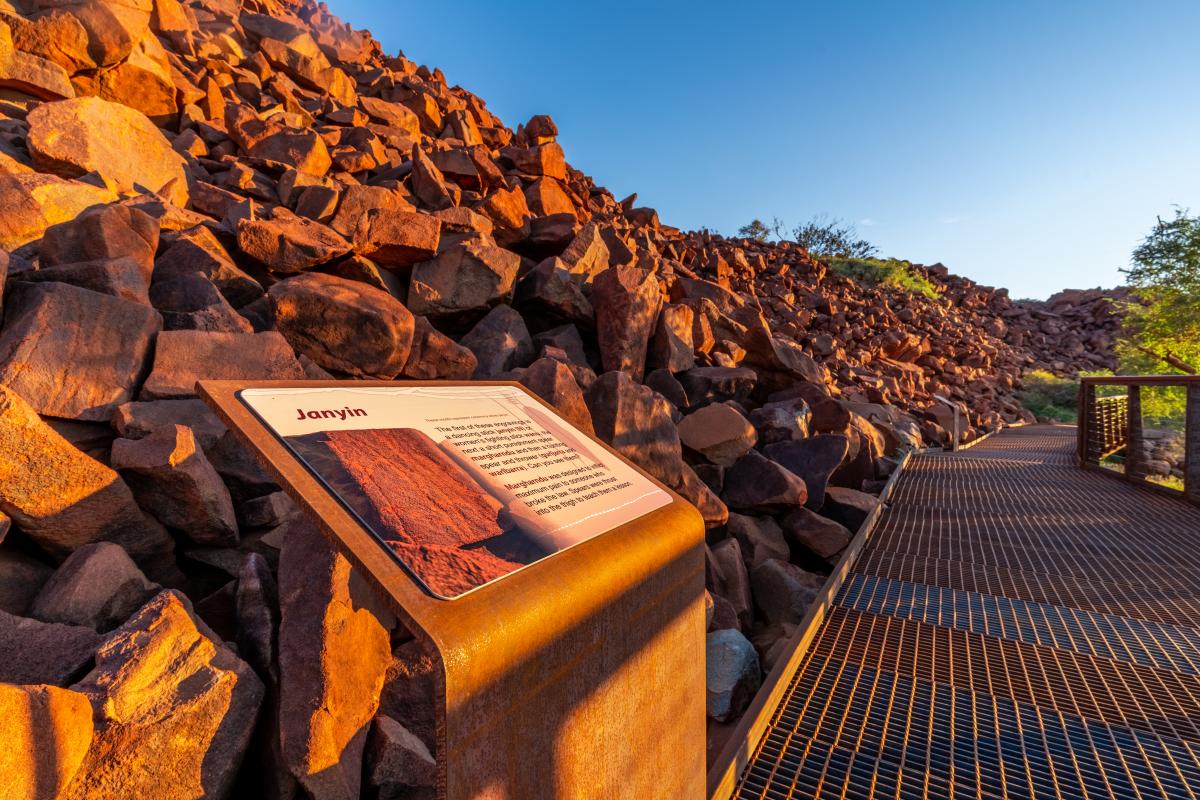
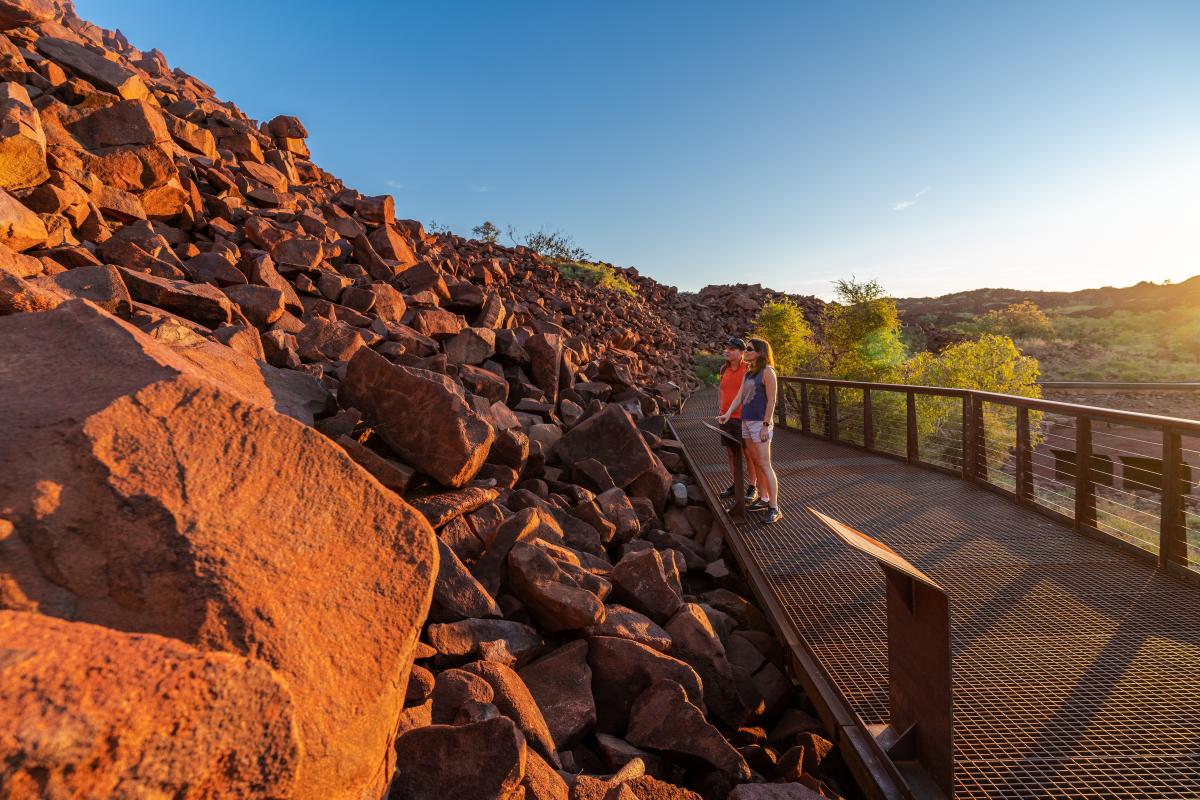
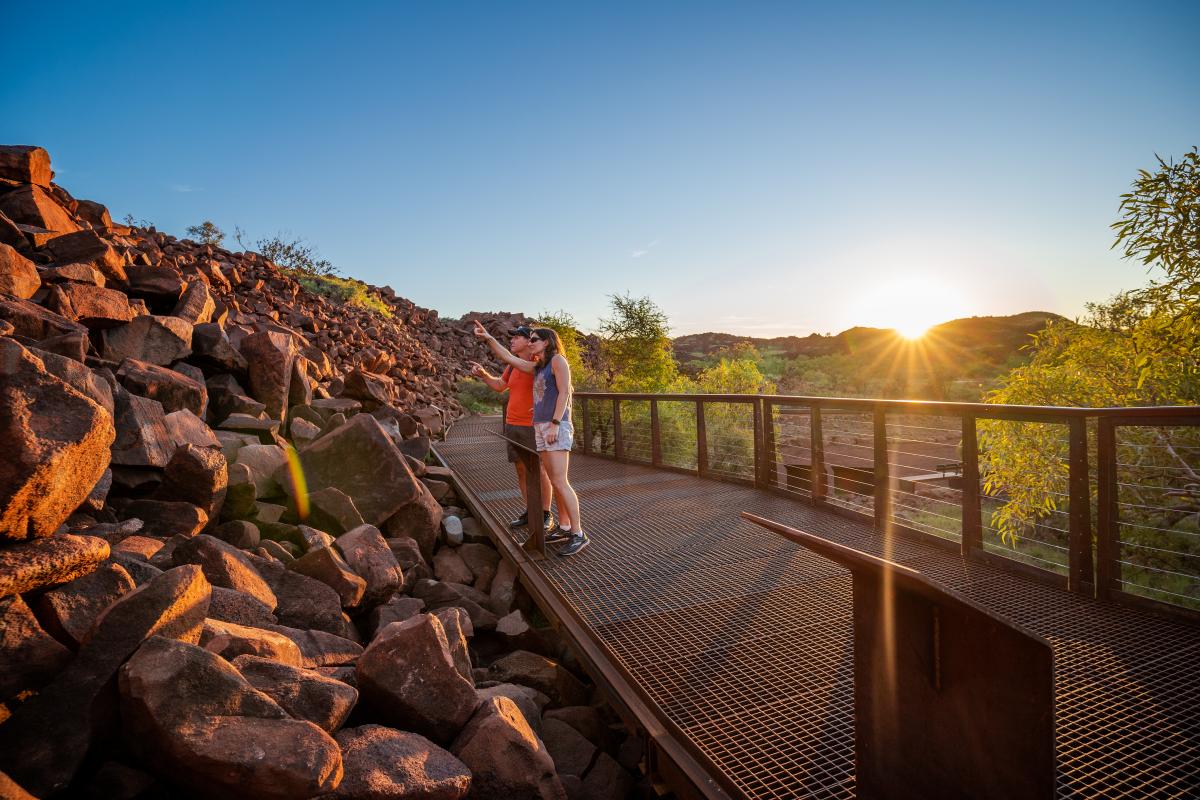
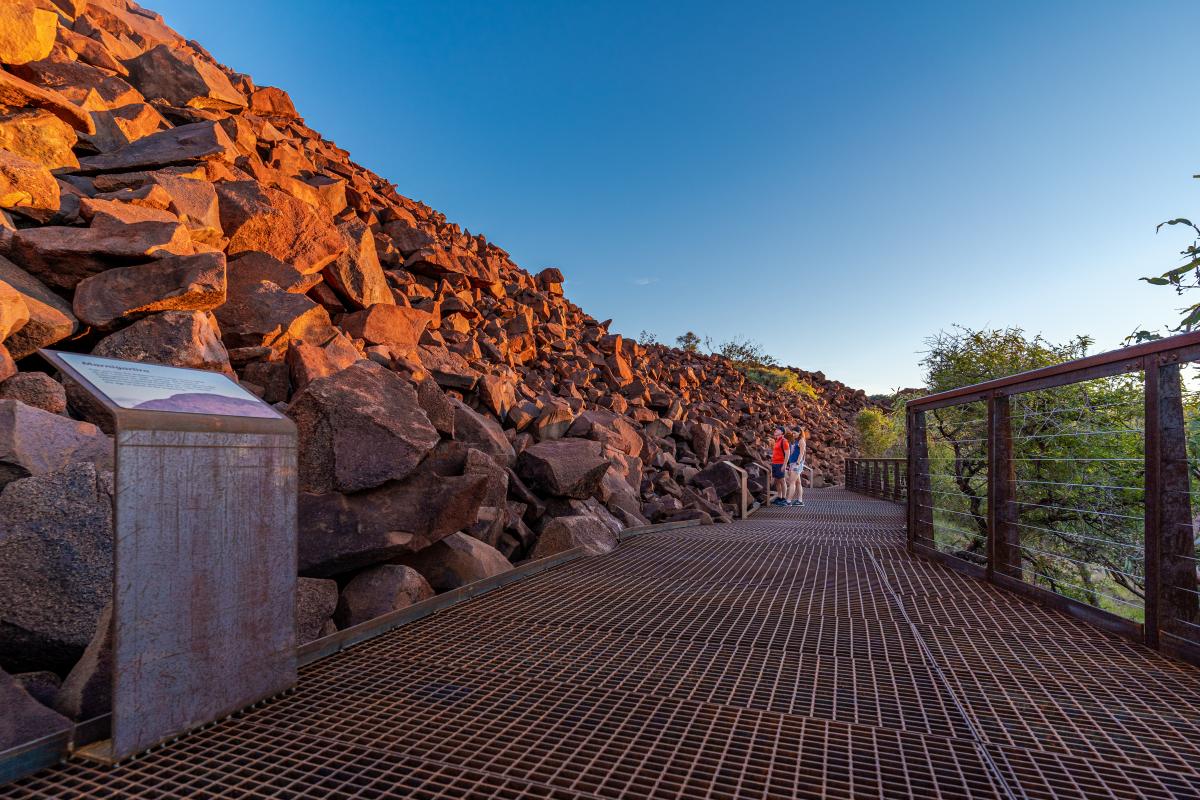
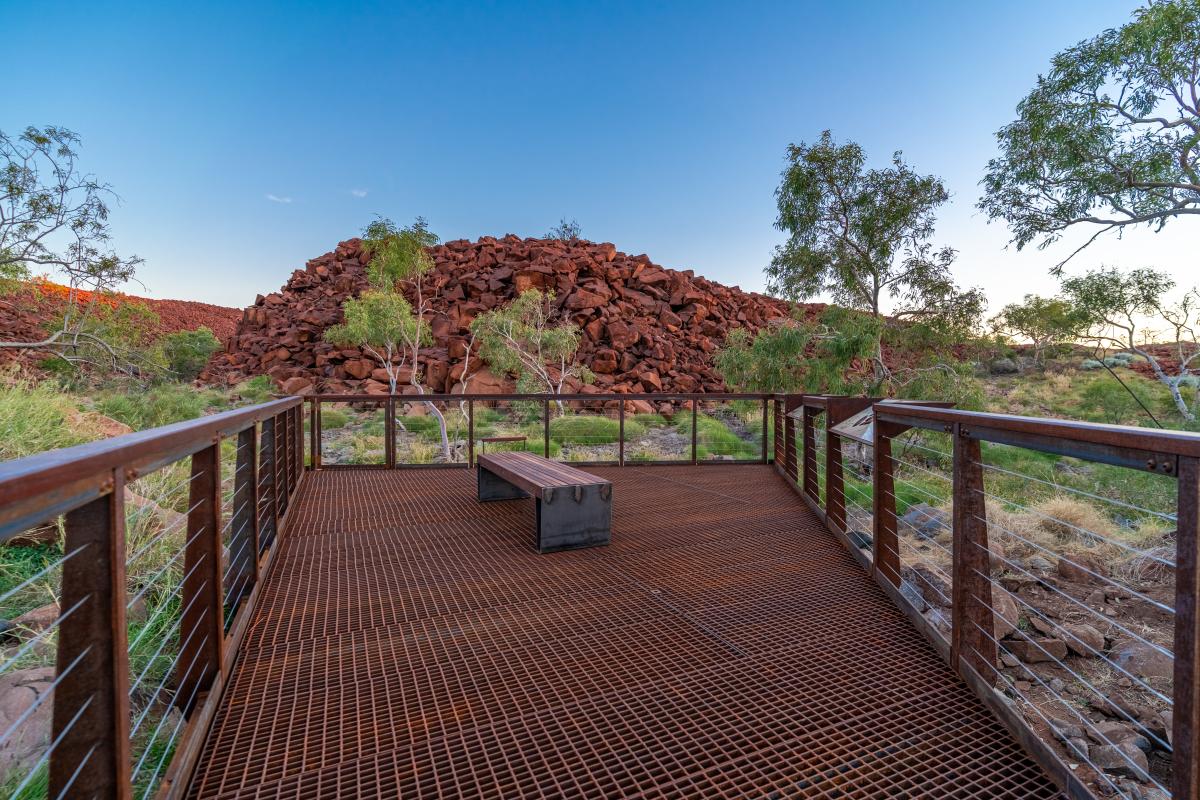
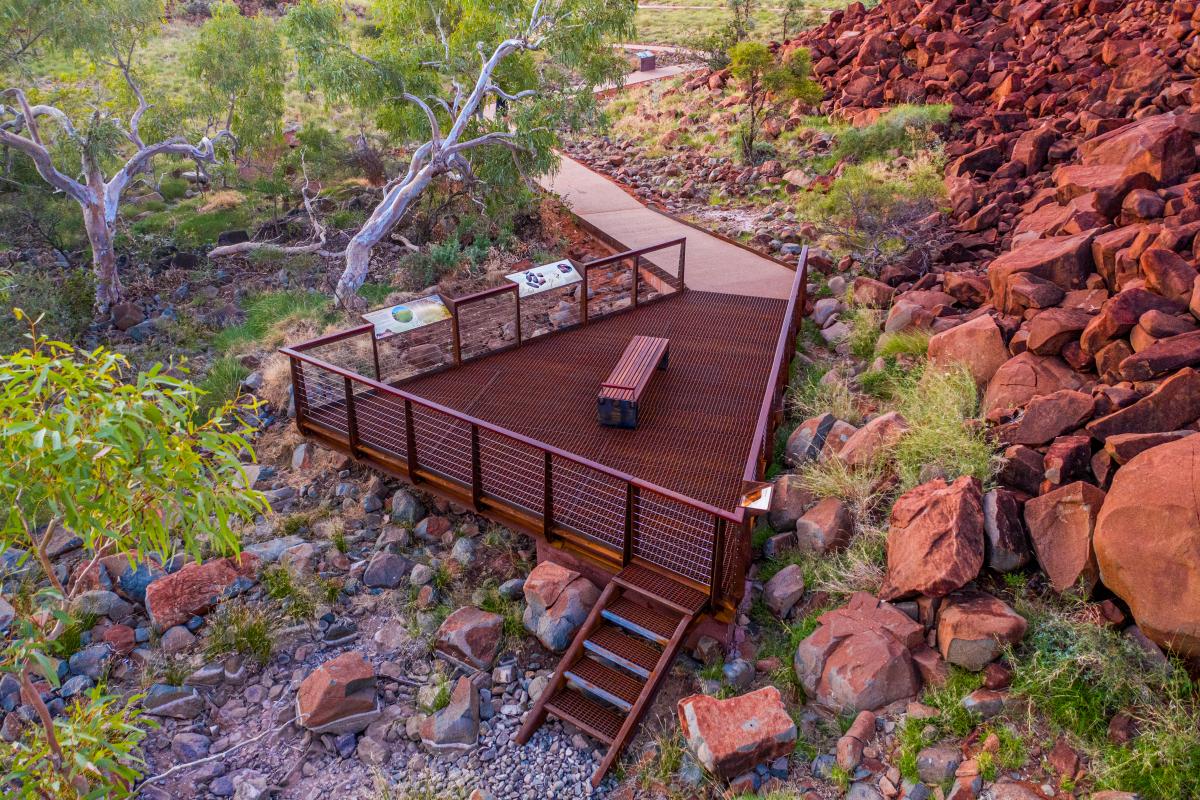
The highlight of Murujuga National Park are its petroglyphs. This is art that’s engraved onto rocks. Murujuga is home to the largest and most diverse collections of rock art in the world. The images shown in the art capture at least 47,000 years of human existence. Mind blowing! Explore the art and information along a specially designed 700m boardwalk.
Murujuga means “Hip Bone Sticking Out” in the Ngarluma-Yaburara language. It refers to the 42 islands of the Dampier Archipelago, Burrup Peninsula and Murujuga National Park. The Ngarda-Ngarli have been part of Murujuga for tens of thousands of years and have a deep and spiritual connection to this land.
The petroglyph engravings at Murujuga light up the imagination. They show human images, extinct animals, as well as animals, birds and fish around today. Check out the engravings of Thylacines (Tasmanian tiger). This rock art has deep meaning for Aboriginal people as it provides a link to stories, customs and knowledge of their land and resources. It connects them to the events and people of the past and to their beliefs today. Alongside the rock art you can see fish traps, rock shelters and stone arrangements.
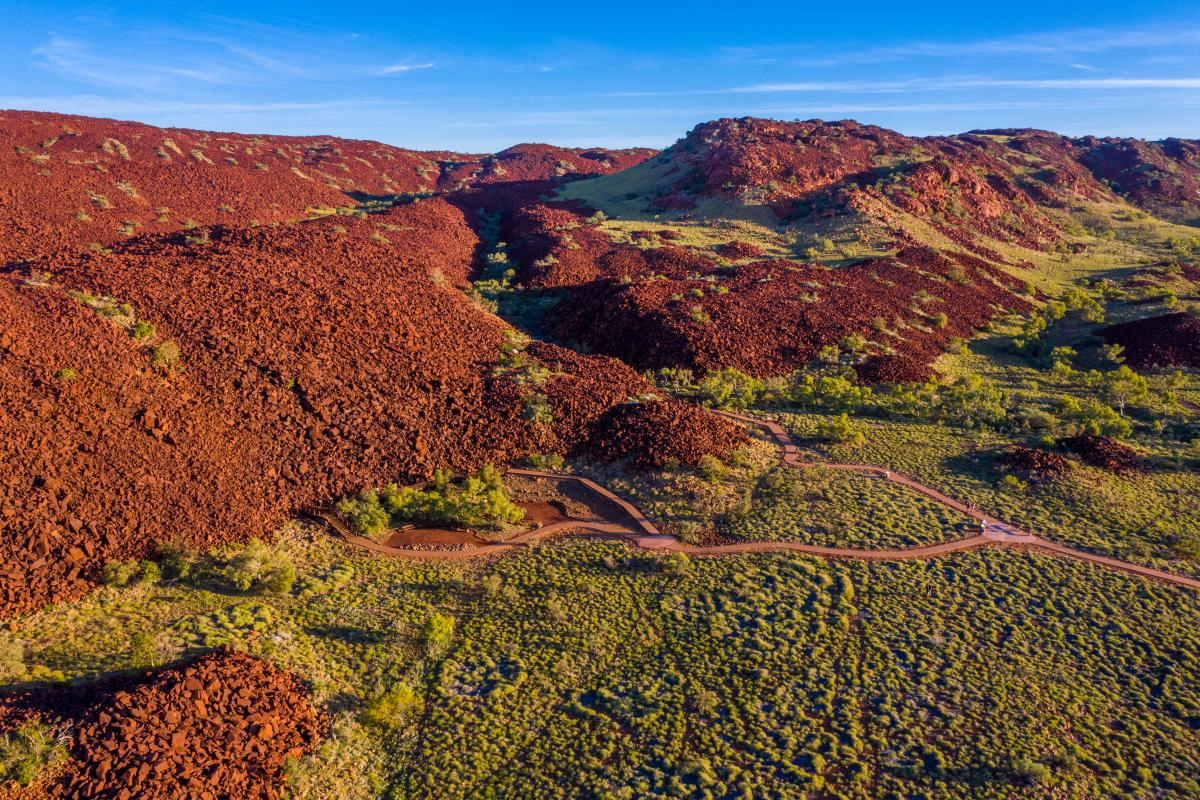
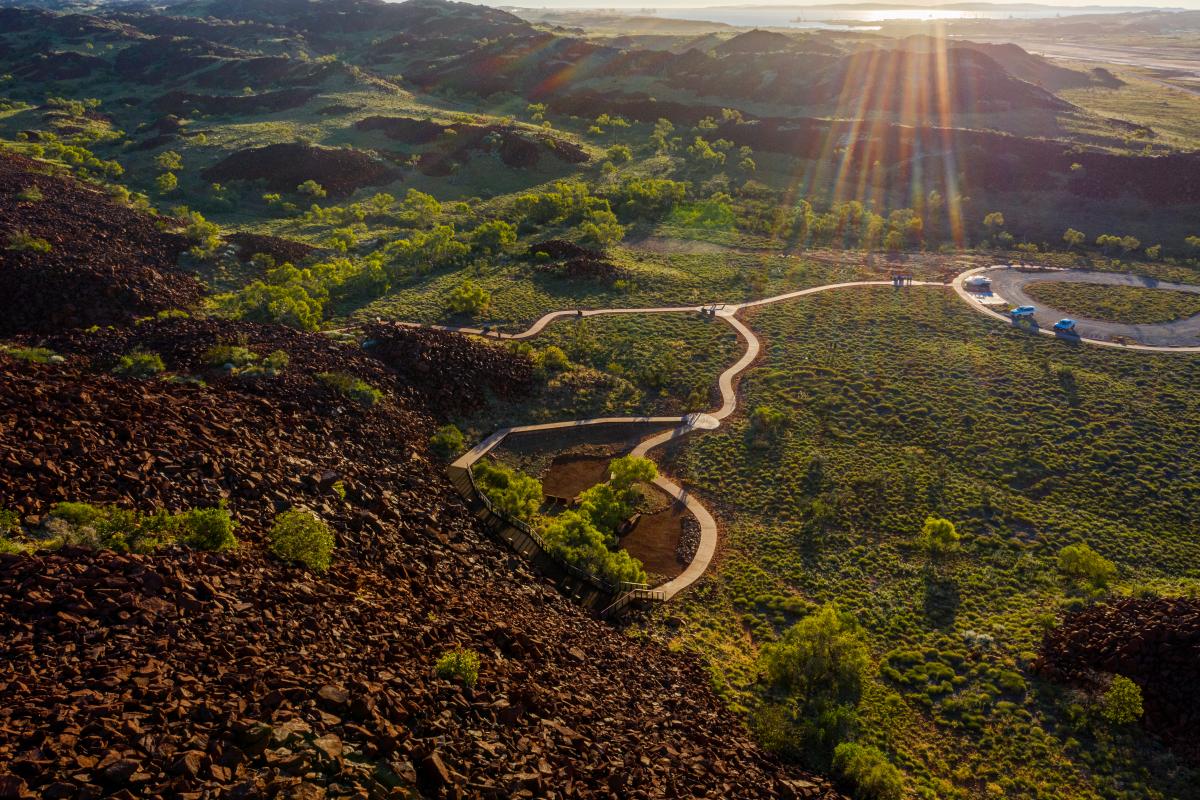
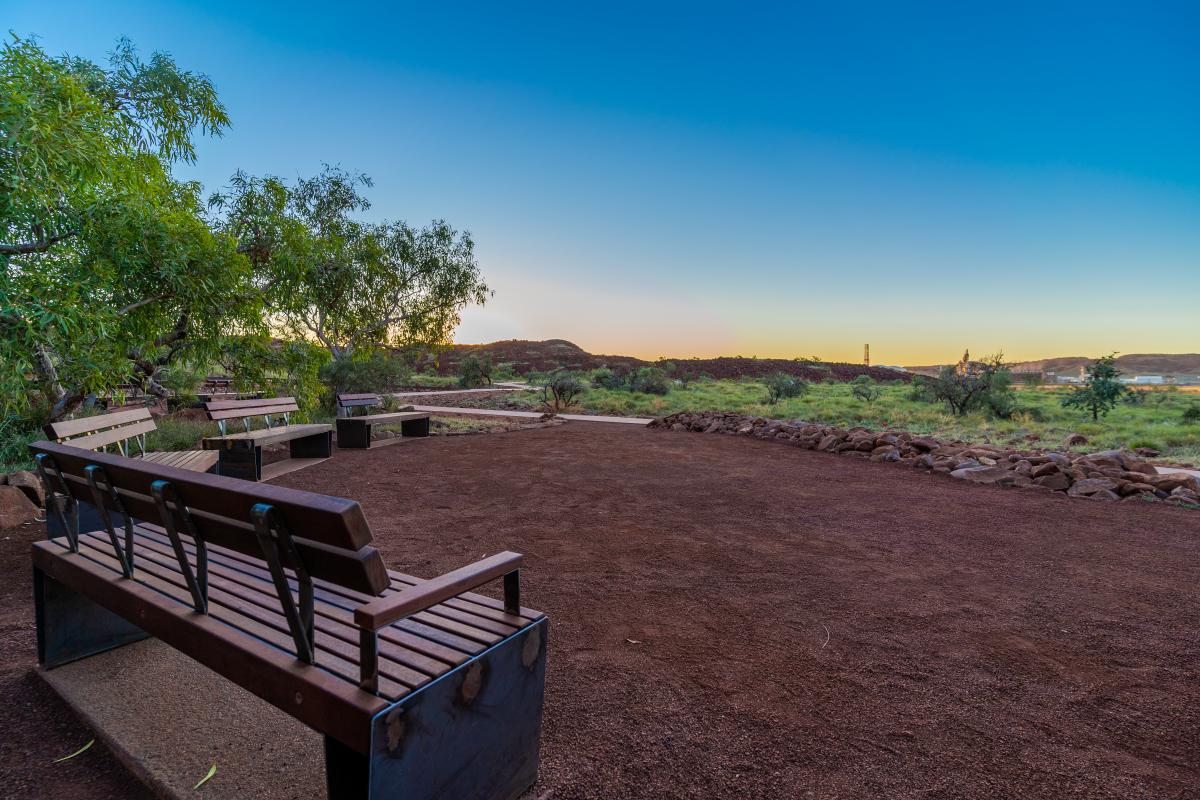
The landscape of Murujuga is diverse. There are rock-strewn cliffs, narrow valleys, mangroves, and mudflats. That’s lots of habitats for lots of wildlife. Over 14 native mammal species live here. Other creatures include 14 species of bats, and 58 reptile species. Look out for the important protected species that live in the park. These include the Pilbara olive python, Rothschild’s rock wallaby and several shorebirds.
In July 2025, the Murujuga Cultural Landscape was inscribed on the United Nations Educational, Scientific and Cultural Organisation (UNESCO) World Heritage List following many years of effort by Ngarda Ngarli Traditional Owners and Custodians represented by Murujuga Aboriginal Corporation. Murujuga is a deeply storied cultural landscape that contains a rich assemblage of tangible and intangible sites, cultural traditions and spiritual places. With an estimated one to two million images, Murujuga is home to one of the largest, densest, and most diverse collections of rock art in the world. The rock art, along with stone arrangements, shell middens and stone tools, provide a visual and archaeological record of continuous care and use of the area for over 50,000 years. The World Heritage area encompasses the Burrup Peninsula, the Dampier Archipelago’s 42 islands, and nearby marine areas and holds profound cultural and spiritual significance to Ngarda-Ngarli Traditional Owners and Custodians.
Murujuga National Park is the first national park to be jointly managed in Western Australia. It is owned by the Murujuga Aboriginal Corporation (MAC). MAC represents the five traditional owner groups of the area. These are the Ngarluma, Yindjibarndi, Yaburara, Mardudhunera and Wong-Goo-Tt-Oo peoples. Ngarda-Ngarli is their collective name. The national park is leased back to the WA State Government and jointly managed by MAC and the Department of Biodiversity, Conservation and Attractions. This joint management approach recognises the continuing Aboriginal connection to country. It recognises the ongoing Aboriginal responsibility for country. Read more about this in Aboriginal cultural heritage in parks.
Review – Great easy stop
Lovely stop, all just reopened today and the boardwalk and signage now make it easy to navigate even with very young children. It was a little hard to make out some of the art in the morning sun, think perhaps late arvo would be the best but it was definitely well worth a wander. Allow 30 mins to have an easy stroll.
Caravan_of_kidlets – Trip Advisor
Safety information
Plan when to visit. Read this safety information about bushwalking. Consider travelling with a personal location beacon (PLB). In the event you need to be rescued it could save your life!
Western Shield - The Department of Biodiversity, Conservation and Attractions undertakes 1080 baiting at this location to reduce the impacts of feral cats and foxes on native wildlife.
Meat baits containing 1080 poison are laid in or around this area on an ongoing basis. 1080 is poisonous to humans and will kill domestic cats and dogs. Pets are not permitted in this park.
For further information contact your local Parks and Wildlife Service office or visit Western Shield.
Gallery
Murujuga Project
Find out more about the new and improved visitor infrastructure is coming to Murujuga National Park.
https://www.dbca.wa.gov.au/management/park-and-infrastructure-projects/murujuga-projec
Plants, wildlife and fungi
Visit the Atlas of Living Australia for a list of species recorded in Murujuga National Park.
Traditional Owners
We recognise and acknowledge Mardudhunera, Ngarluma, Wong-Goo-Tt-Oo, Yaburara and Yindjibarndi people as the Traditional Owners of Murujuga National Park.